Why Remote Workers Choose Parks with Fiber Infrastructure

 By Nicole Cimino September 12, 2026
 Remote workers pick campgrounds for the lifestyle — a new view every week, a hike at lunch, income without giving up the outdoors. But that only works if the internet holds up for actual work: video calls that don’t lag, files that upload on the first try, deadlines that don’t slip because the connection dropped.
Remote workers don’t choose a park on scenery alone. They choose parks where they can actually work, which means proven speeds and reliability that doesn’t fall apart during business hours.
Your Highest-Value Guests
A remote worker booking a site for a month generates far more revenue than a week-long tourist. Reliable connectivity directly extends stays and attracts guests who pick parks partly based on whether the connectivity supports their job.
Parks that can point to real work-from-park speeds are competing for a guest most parks can’t reliably serve.

What Bad Wi-Fi Actually Costs You
A guest with unreliable Wi-Fi doesn’t usually complain to you first. They leave a review mentioning it before they even check out.
Remote workers reading reviews before booking notice the difference between “perfect for working” and “too laggy for video calls,” and they book accordingly. A single bad connectivity review can cost you months of remote worker bookings.
Latency Affects Work Quality More Than Speed
A remote worker on a 10 Mbps fiber connection works better than a remote worker on a 50 Mbps satellite connection. Fiber has low latency (20-50ms). Satellite has 600+ milliseconds of latency. That latency makes video calls feel awkward and file transfers unpredictable.
Remote workers experience your park’s connectivity quality through call responsiveness and application performance. For actual work productivity, low latency matters more than raw speed.
Guarantees Beat Potential
“Up to 100 Mbps” on shared tower infrastructure often means 100 Mbps at 10 AM and 10-15 Mbps once other guests are online for video calls during business hours. Remote workers plan their day around a number they can count on.
“50+ Mbps per device, guaranteed” backed by a service-level agreement lets them do that. Infrastructure built for peak-occupancy consistency is what separates parks that attract remote workers from parks that lose them.
Parks relying on shared tower capacity compete on price. Remote workers don’t choose based on price. They choose based on whether they can actually work from your park.
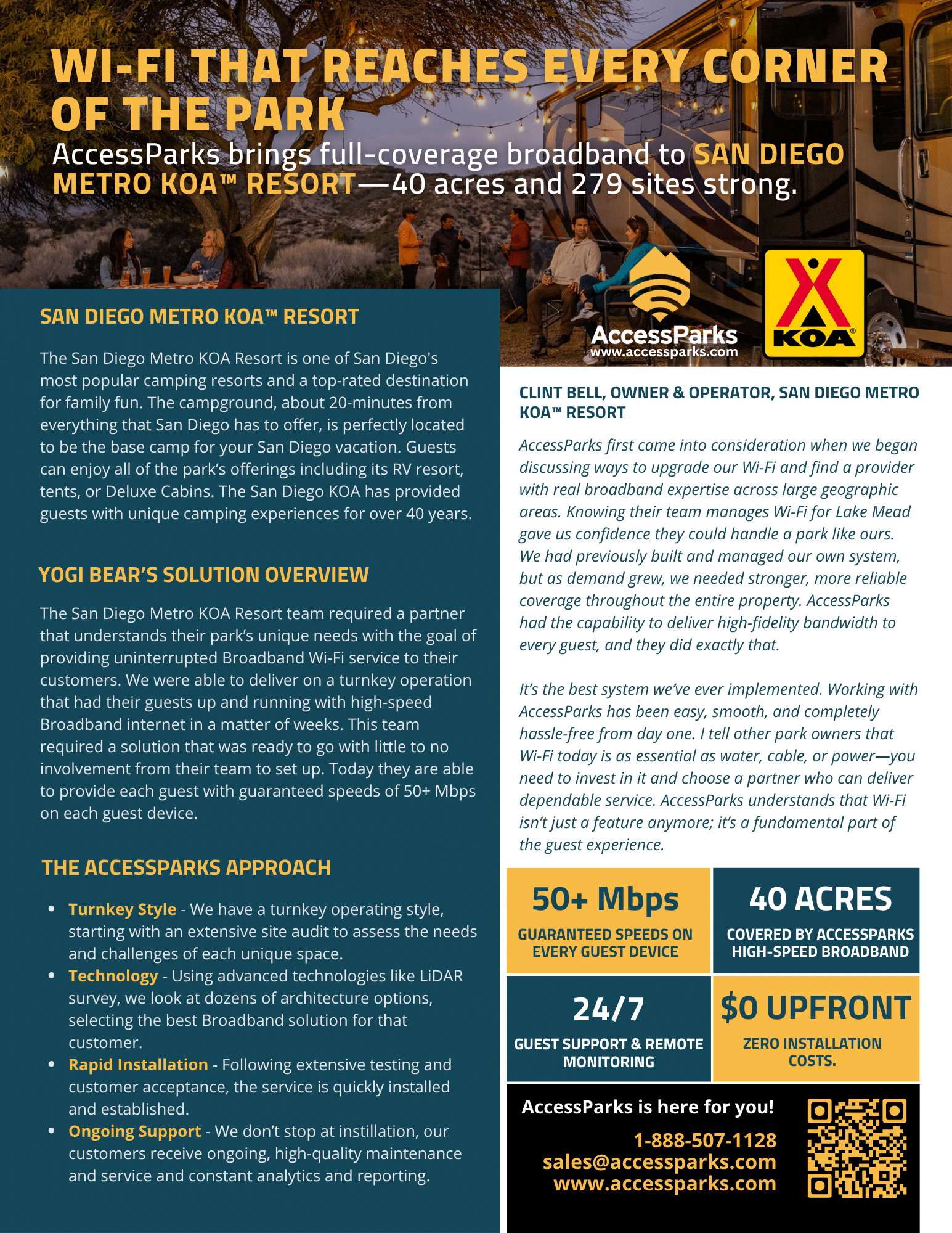
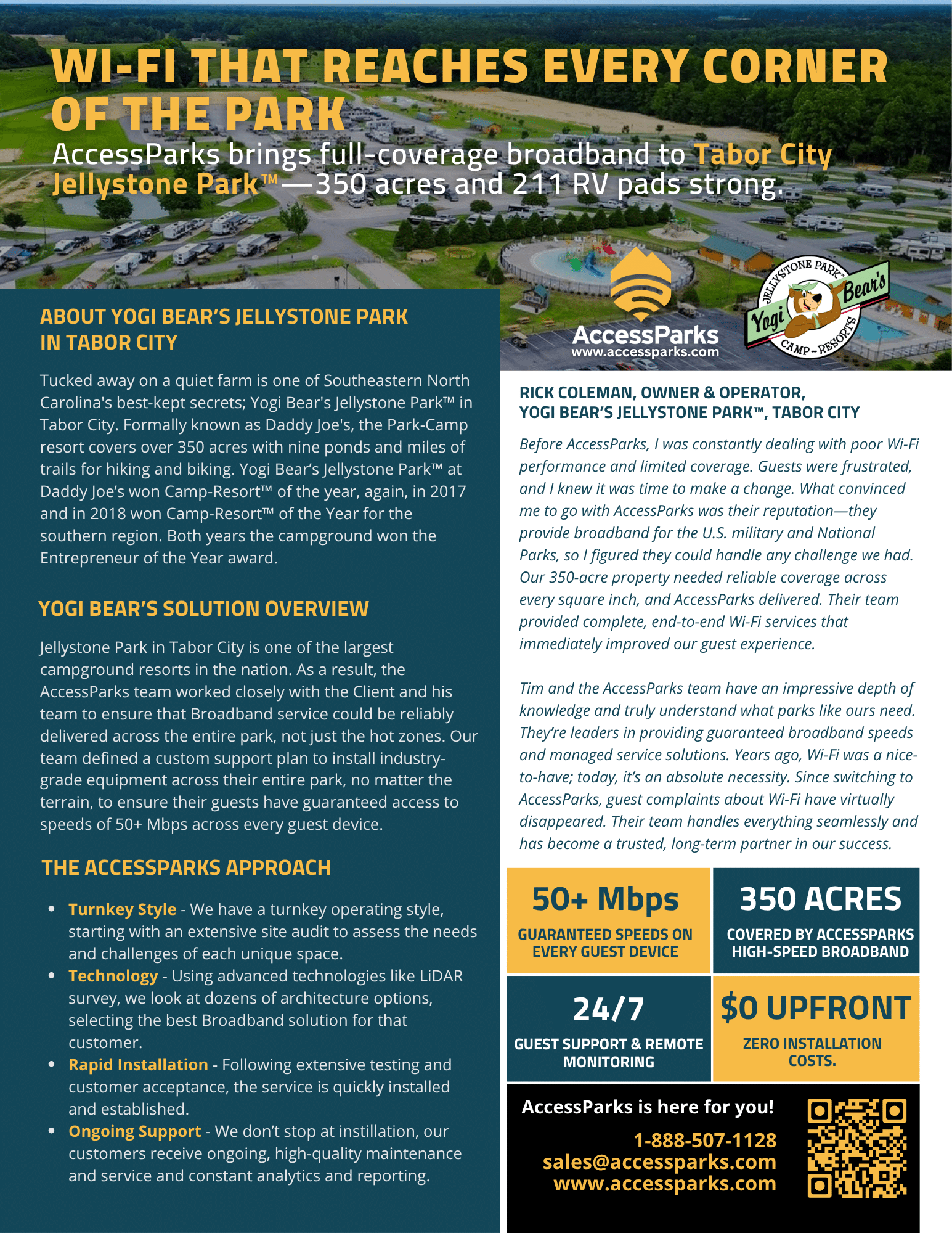
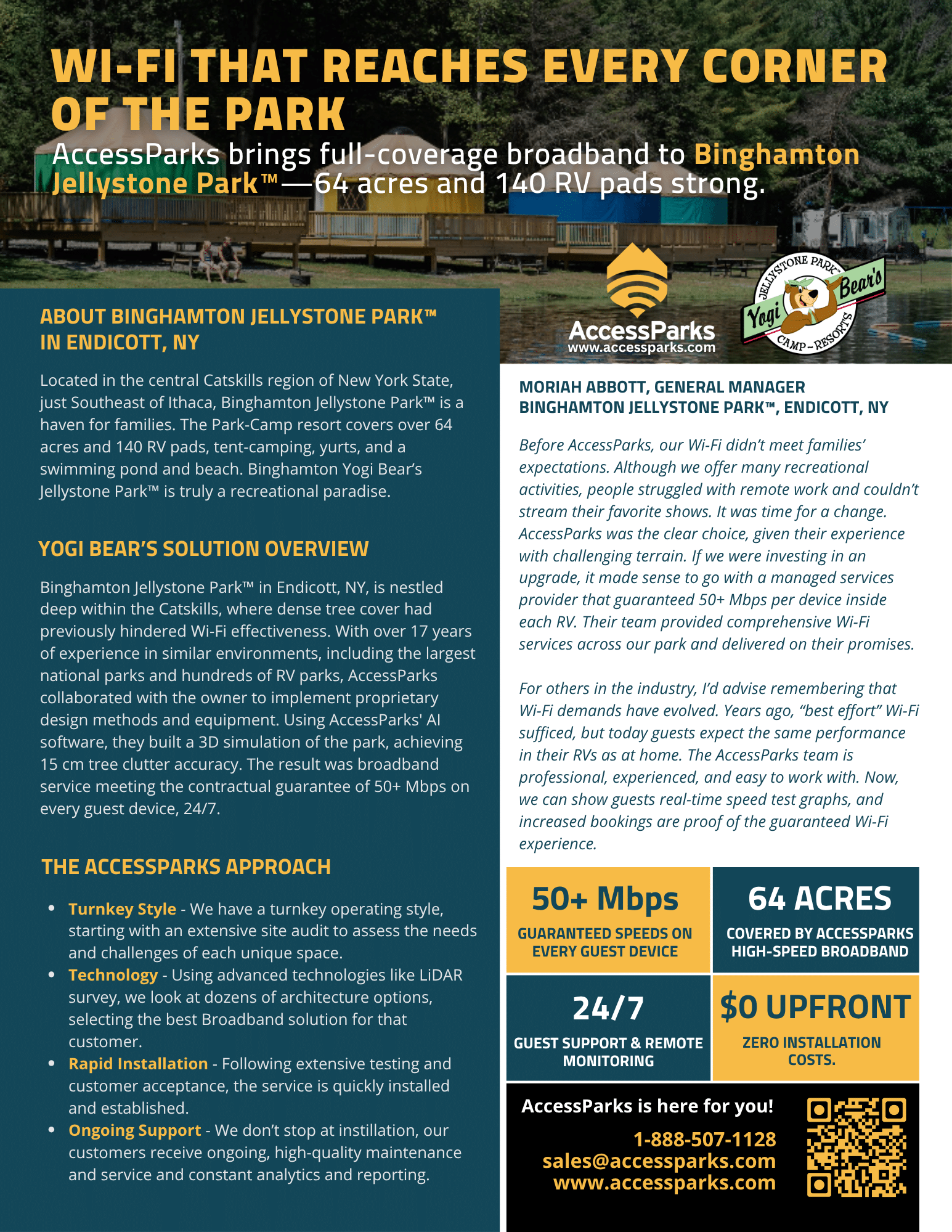
AccessParks builds fiber-backed infrastructure designed for remote workers: 50+ Mbps per device guaranteed during business hours, low latency for real-time collaboration, and reliability that enables work instead of complicating it.
Let’s connect to talk about positioning your park for remote workers.