

AccessParks was recently featured on pages 19 and 20 of the August 2026 issue of Woodall’s Campground Magazine in the article, “From Amenity to Necessity: Ensuring Great Wi-Fi Access Is a Smart Business Decision, Experts Say.” The feature explores a reality campground and RV park owners can no longer ignore: reliable Wi-Fi is not simply […]

You’re showing a prospect a well-maintained home in your community. Nice lot. Good neighbors. Solid value. They ask about lot rent. You tell them. They pause. “The community down the road is $75 less per month.” You mention your pool, fitness center, and gated access. They nod. Then they ask: “What about internet?” With AccessParks, […]

You decide to upgrade your community’s internet. Finally. Residents have been complaining for months. Prospects keep asking about connectivity. You get quotes. Pick the option that seems reasonable. Sign a contract. Six months later, residents are still complaining. Peak hour performance is terrible. The provider blames your residents’ devices. You’re locked into a multi-year agreement. […]

Your phone rings. A prospect wants information about your community. You answer their questions about lot sizes, amenities, and pricing. Then they ask: “What’s the internet situation there?” How you answer determines whether they schedule a tour or move to the next community on their list. Prospects don’t ask this question casually. They’re evaluating whether […]

A guest books one night. Checks in. Loves your park. Plans to extend their stay for the week. Then they try to work from the RV. Video call drops three times. Files won’t upload. By evening, they’ve decided to leave in the morning. You lost six nights of revenue because Wi-Fi couldn’t support one video […]

Your Wi-Fi infrastructure is your park’s first impression. Guests test your signal before reading reviews, seeing amenities, or talking to staff. That connection quality communicates everything about your commitment to guest experience. Weak signal says “we don’t maintain this property.” Strong signal says “we invested in quality.” At AccessParks, we built infrastructure that makes a […]

Park Wi-Fi at full occupancy is the real test of your network. Memorial Day weekend arrives, your park fills to 100% capacity, and guest complaints about internet performance start immediately. This pattern repeats during every holiday weekend and peak summer week, damaging guest satisfaction during your most profitable periods. Fiber-backed infrastructure designed for peak demand […]

Starlink for large parks looks tempting on paper. Starlink’s marketing success and widespread consumer adoption make it seem like an obvious solution for RV park internet. Individual RVers using personal Starlink dishes get adequate performance for single-household use, leading park owners to consider deploying multiple connections to serve their entire property. However, the per-connection costs, […]

Fiber internet and resident retention are tightly linked in manufactured housing communities. Prospective residents research these communities online before scheduling tours, and internet quality appears prominently in reviews shaping their decisions. Poor connectivity generates negative feedback deterring qualified prospects, while reliable internet creates competitive advantages. Fiber-backed infrastructure can help to eliminates the connectivity complaints that […]

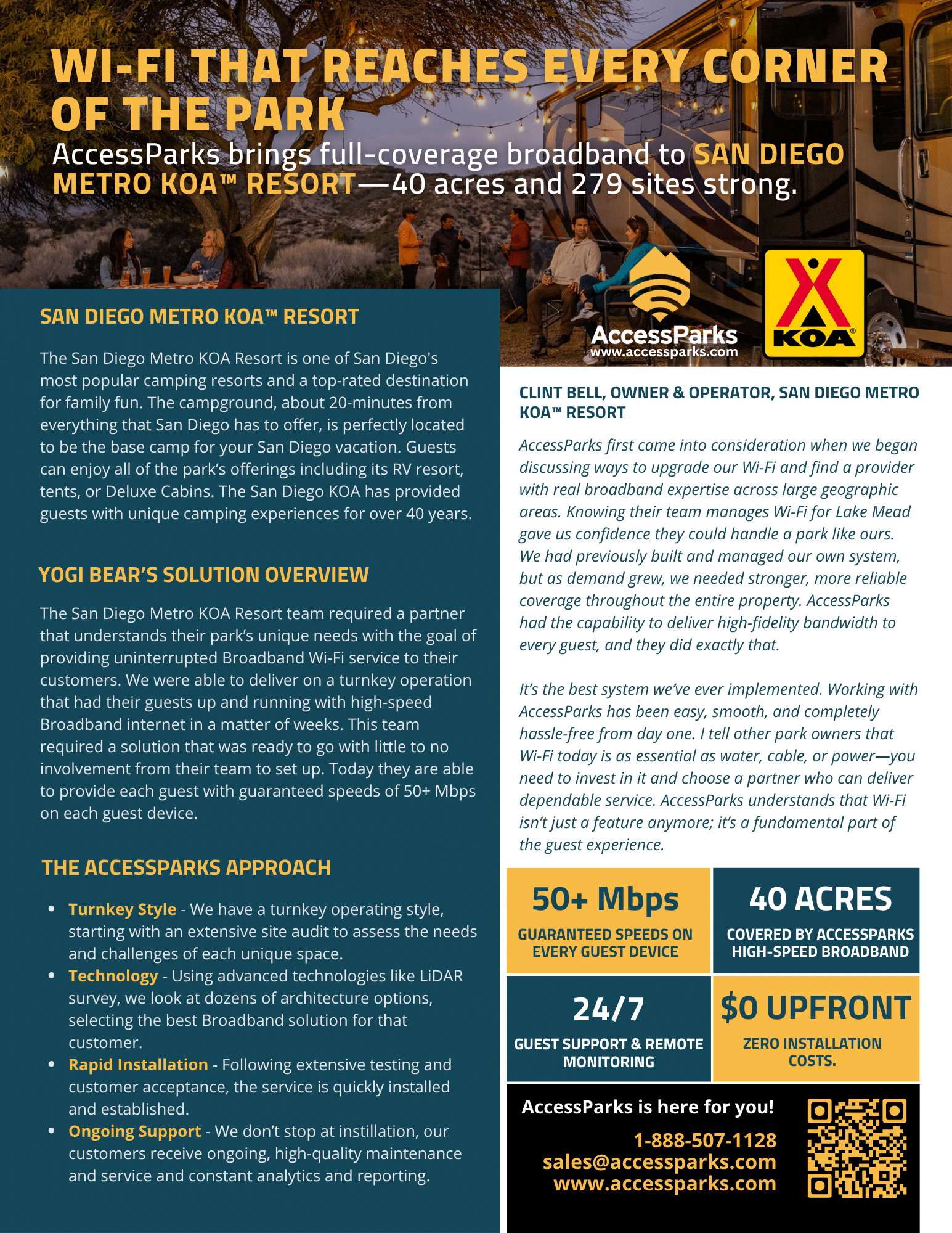
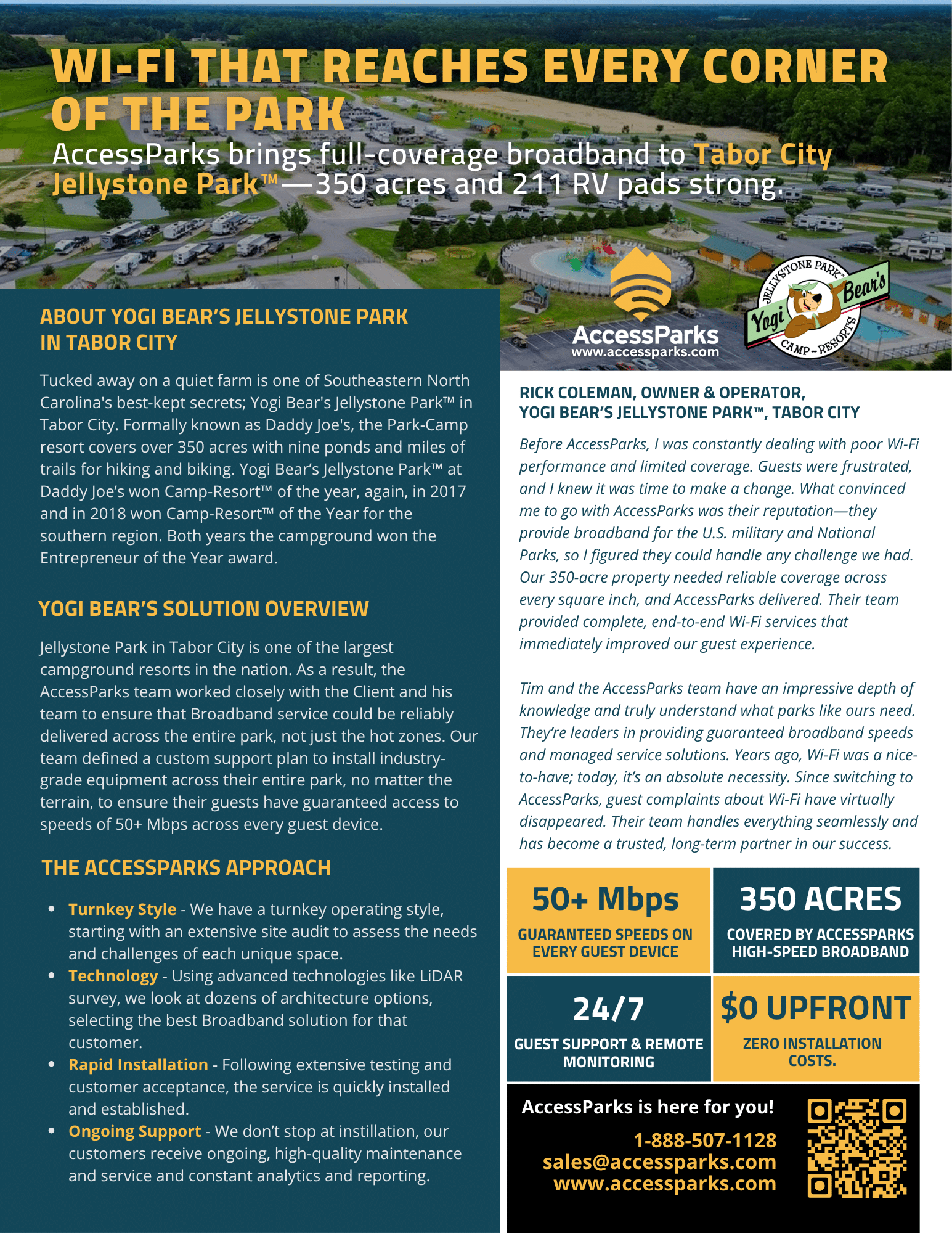
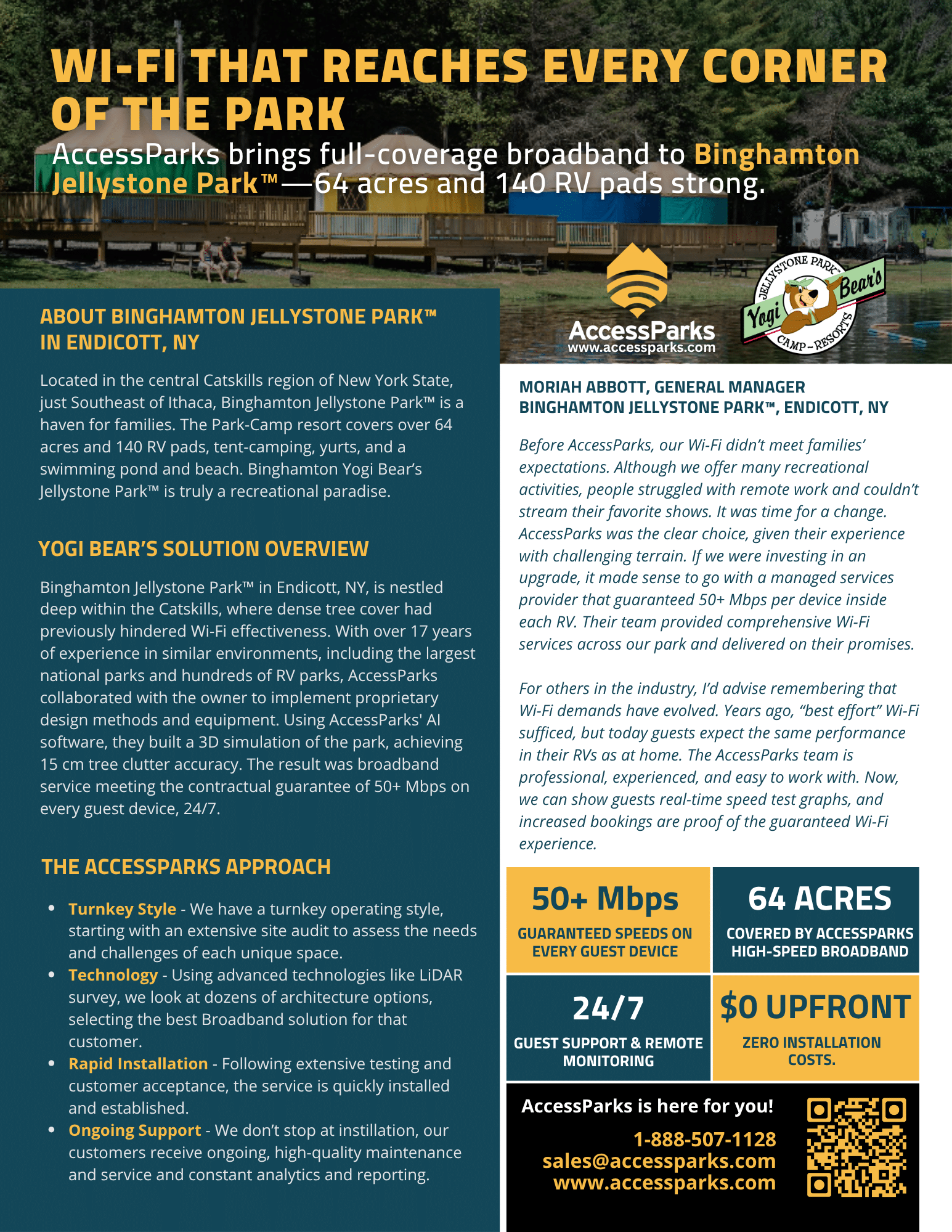
When comparing fiber vs satellite internet, rural RV parks and campgrounds face a clear choice. Distance from urban infrastructure often makes satellite internet seem like the only viable option. However, fiber backhaul infrastructure solves these challenges with reliable, weather-immune connectivity that scales efficiently, while satellite creates performance limitations, weather dependencies, and scaling problems poorly suited […]