Starlink vs. Managed Wi-Fi: What’s Best for Your RV Park?

 By Nicole Cimino December 12, 2025
 RV park owners face a decision that affects guest satisfaction, operational costs, and property competitiveness: should you let guests rely on their own Starlink dishes, or implement park-wide managed Wi-Fi?
The answer isn’t as simple as choosing the newest technology. Each approach creates different experiences for guests, different revenue models for your business, and different long-term infrastructure implications.
How Starlink Works for RV Parks and Campgrounds
Starlink delivers internet through satellite connections rather than ground-based infrastructure. RV owners mount dishes on their vehicles and pay Starlink directly for service, typically $150 monthly for the roaming plan that works across locations.
From your perspective as a park operator, individual Starlink usage requires zero infrastructure investment. Guests bring their own equipment and manage their own connectivity. You’re not responsible for installation, maintenance, or support.
This sounds appealing until you examine the guest experience and competitive positioning. Starlink performance varies significantly based on network congestion, weather conditions, and satellite availability in your region.
How Managed Wi-Fi Works for RV Parks
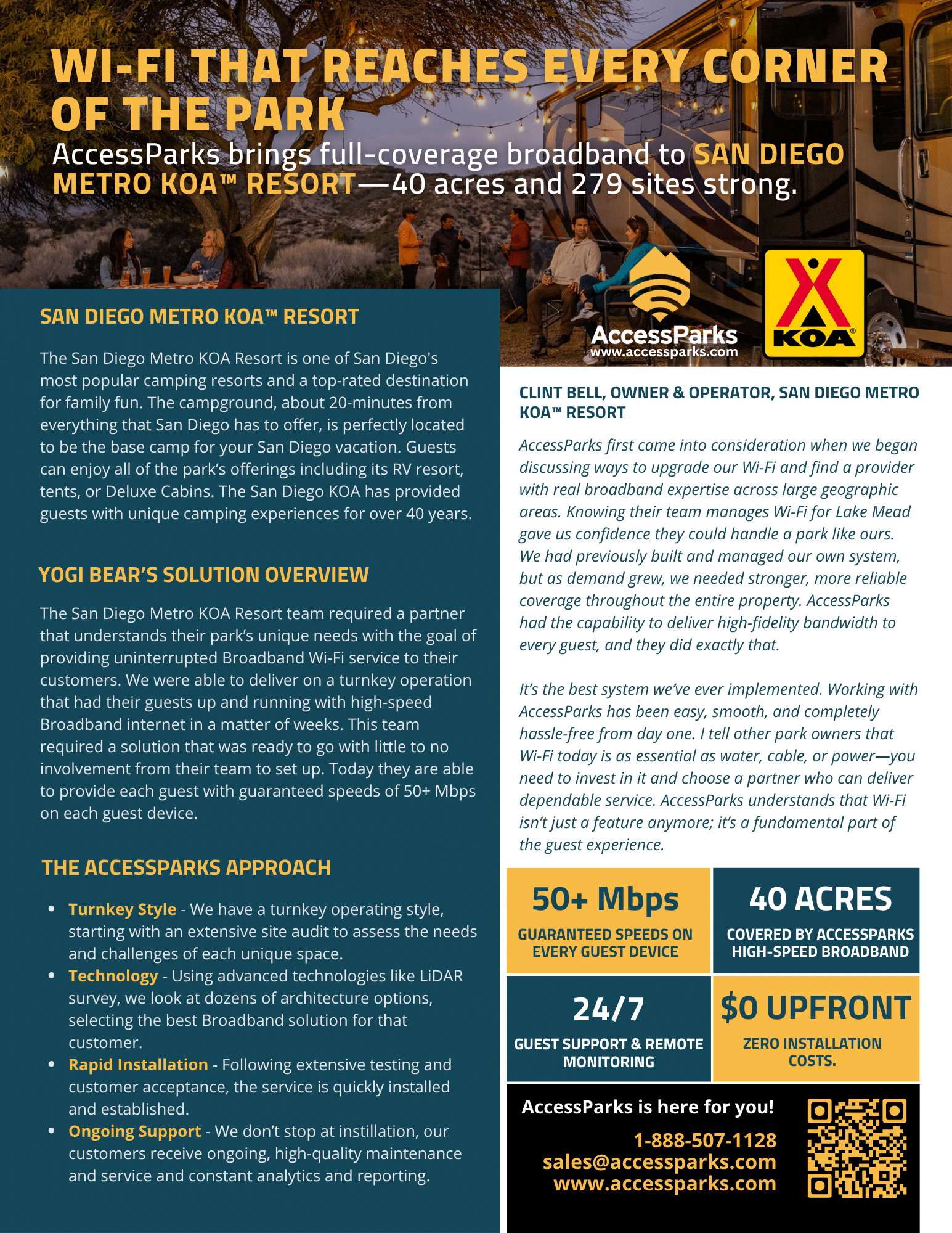
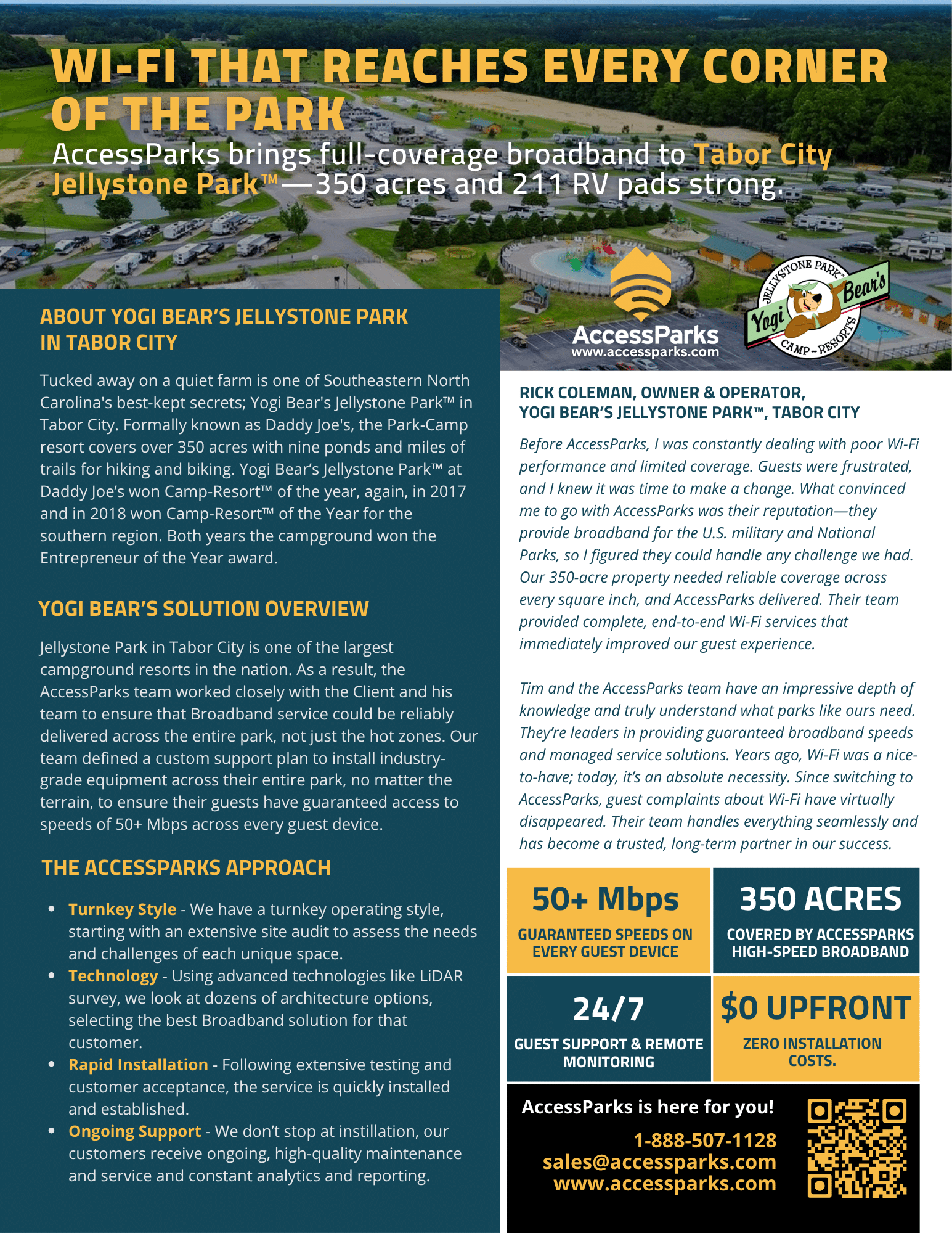
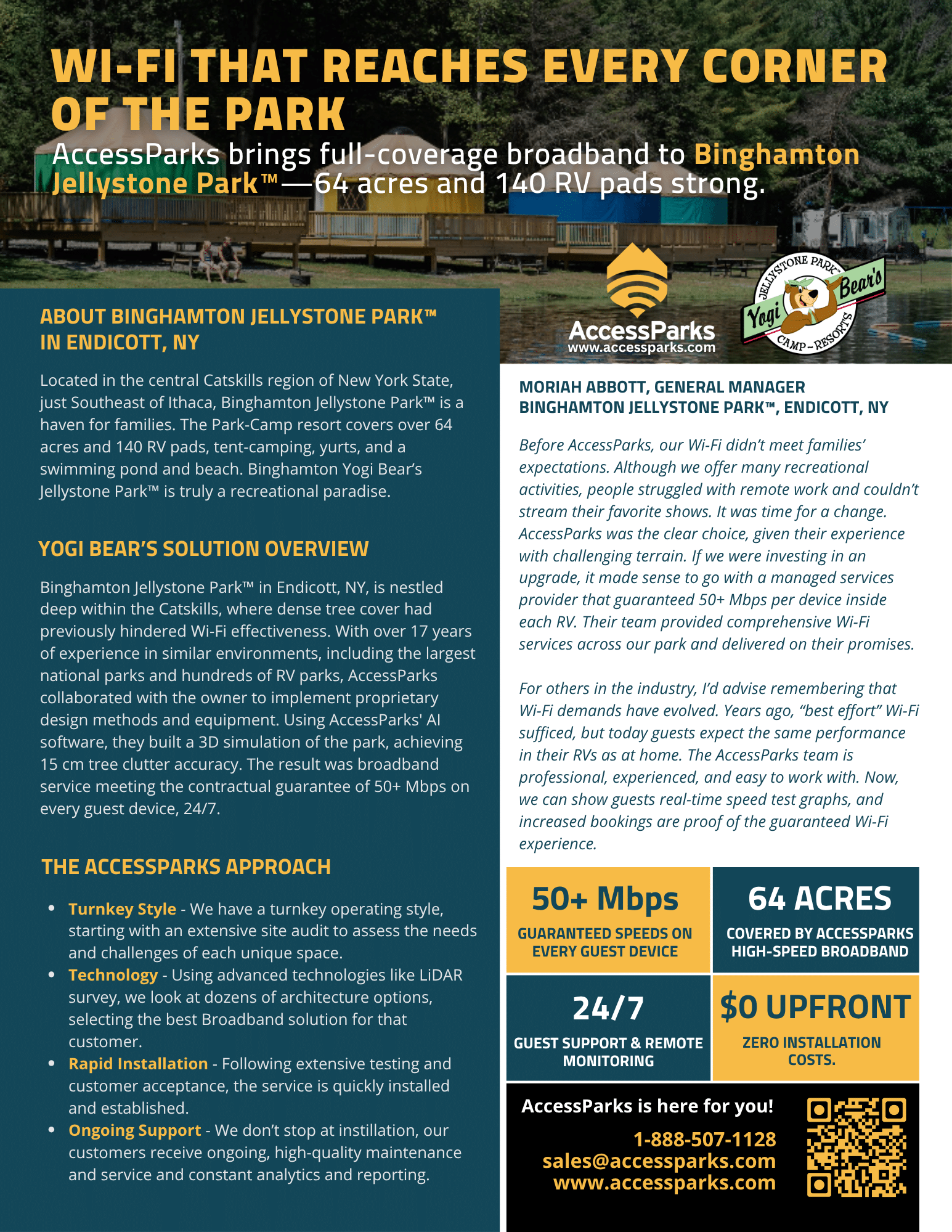
Managed Wi-Fi means your park installs enterprise-grade wireless infrastructure covering all sites. Guests connect to your network the way they connect to Wi-Fi at hotels or airports, no personal equipment required.
Fiber-optic backhaul delivers bandwidth to wireless access points positioned throughout your property. Professional network design ensures consistent coverage across all sites. Guests get reliable connectivity regardless of which site they occupy.
You control the guest experience completely. Performance stays consistent during weather events that disrupt satellite service. Support issues get resolved by your managed Wi-Fi provider rather than guests troubleshooting their own equipment.
Managed Wi-Fi also creates revenue opportunities that individual Starlink usage doesn’t. Device-based pricing models let you offer one device free at 50+ Mbps, then capture revenue when guests upgrade to connect their additional devices.
Starlink vs. Wi-Fi: Performance Comparison for RV Park Guests
Performance differences matter when guests are working remotely or streaming entertainment after a day exploring your area.
Starlink delivers variable speeds based on network congestion and conditions. Latency runs 25-60ms on good days, higher during congestion. Upload speeds typically hit 10-20 Mbps, adequate for most uses but limiting for guests uploading large files or running multiple video conferences.
Managed Wi-Fi with fiber backhaul delivers consistent speeds regardless of weather or time of day. Latency stays under 20ms. Symmetrical fiber speeds mean uploads match downloads, critical for remote workers managing video conferences and cloud file transfers.
The reliability difference shows up in guest reviews. Parks relying on individual Starlink get complaints about inconsistent connectivity across sites. Parks with managed Wi-Fi get praised for reliable internet that works from any location on the property.
Cost Analysis: Starlink vs. Managed Wi-Fi for RV Park Operators
Individual guest Starlink costs you nothing upfront but captures zero revenue. Guests pay Starlink $150 monthly whether they’re staying at your park or someone else’s. You’re providing the location but not participating in the connectivity value.
Managed Wi-Fi requires infrastructure investment that varies based on property layout and existing utilities. Your ongoing service costs get recovered through either rate increases or paid upgrades.
The revenue model changes your relationship with connectivity from cost center to profit center. Many RV parks implement a small nightly rate increase across all sites, positioning premium Wi-Fi as an included amenity. This approach alone often covers service costs while improving competitive positioning.
For properties competing in markets where connectivity matters to guests, managed Wi-Fi infrastructure often pays for itself within 2-3 seasons through combination of rate increases and upgrade revenue, while simultaneously increasing property valuation.
Which Solution Is Right for Your RV Park?
Remote locations without fiber access or highly seasonal properties open just 12 weeks annually might find managed Wi-Fi economics challenging. If extending fiber costs $100,000+ or infrastructure sits unused most of the year, guest Starlink becomes the practical default.

However, most successful RV parks in competitive markets find managed Wi-Fi essential. Properties attracting remote workers or digital nomads need reliable connectivity as a core amenity—these guests choose parks based on internet quality and pay premium rates for guaranteed performance. Parks competing where nearby properties offer enterprise-grade Wi-Fi can’t remain relevant with “bring your own Starlink” solutions.
Long-stay and seasonal guests staying weeks or months expect connectivity that works consistently without managing equipment. Properties seeking increased valuation find managed Wi-Fi delivers measurable returns through both fiber infrastructure value and revenue streams that improve cap rate calculations.
Ready to Implement Managed Wi-Fi for Your RV Park?
If you’re evaluating whether managed Wi-Fi makes sense for your property, the decision starts with understanding your market, guest expectations, and infrastructure options.
AccessParks specializes in fiber-backed managed Wi-Fi for RV parks and campgrounds. We design networks that deliver 50+ Mbps per device across every site on your property, with device-based pricing models that generate revenue while delighting guests. Our systems prove performance visually in real-time, so guests see exactly what they’re getting before they upgrade.
Let’s connect to discuss your property’s specific situation. We can help you understand infrastructure costs, revenue potential, and how managed Wi-Fi positions your park competitively against properties still relying on inconsistent satellite solutions.